Monkie
Grocery shopping is an integral part of our lives, yet many grocery stores are still relying heavily on their traditional designs and have been slow to adapt to customers' needs. In this project, our team was assigned to refine the grocery shopping experience.
We focused on a more specific problem.
Parents view grocery shopping as a potential bonding activity with their children; however, children's experience has been overlooked by most grocery stores.
Monkie is our solution.
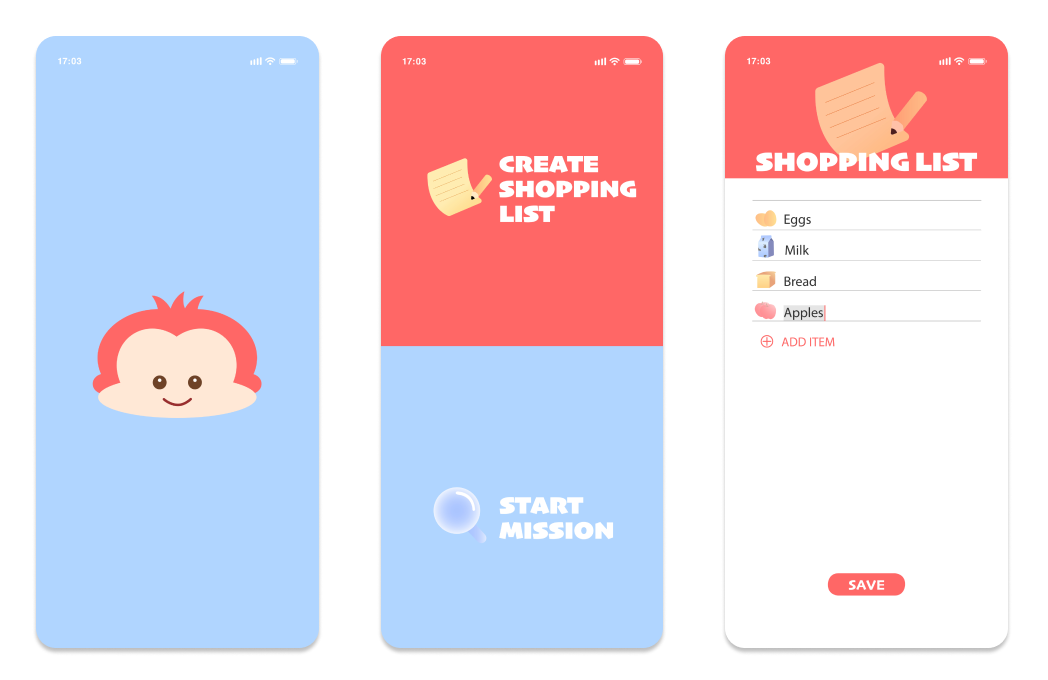
Monkie is a mobile app designed to actively engage children in the grocery shopping experience.
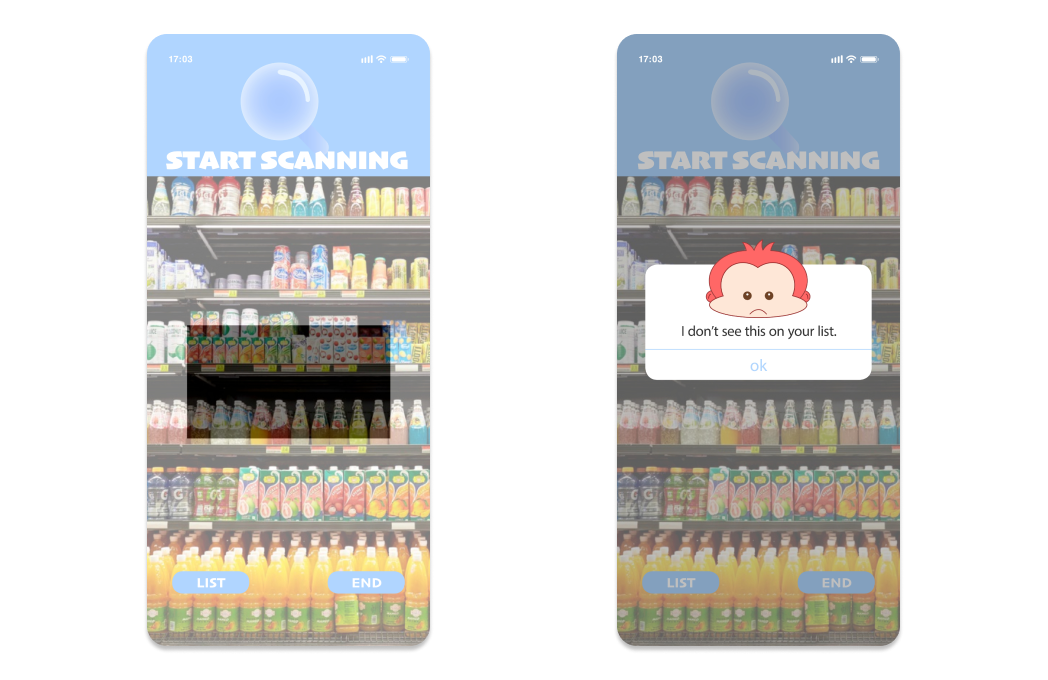
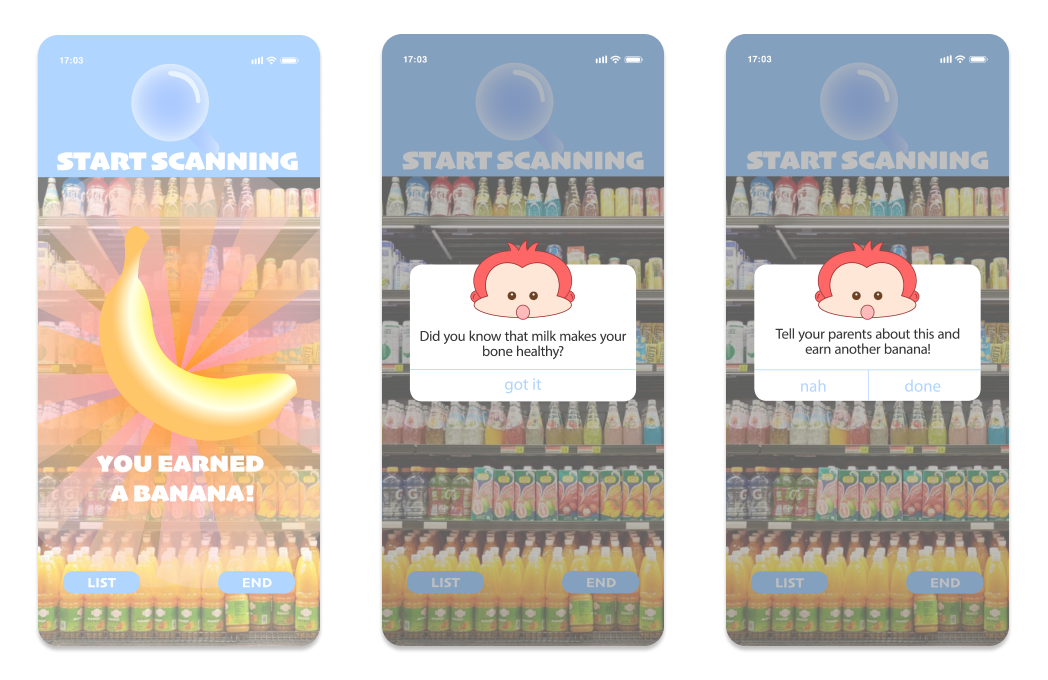
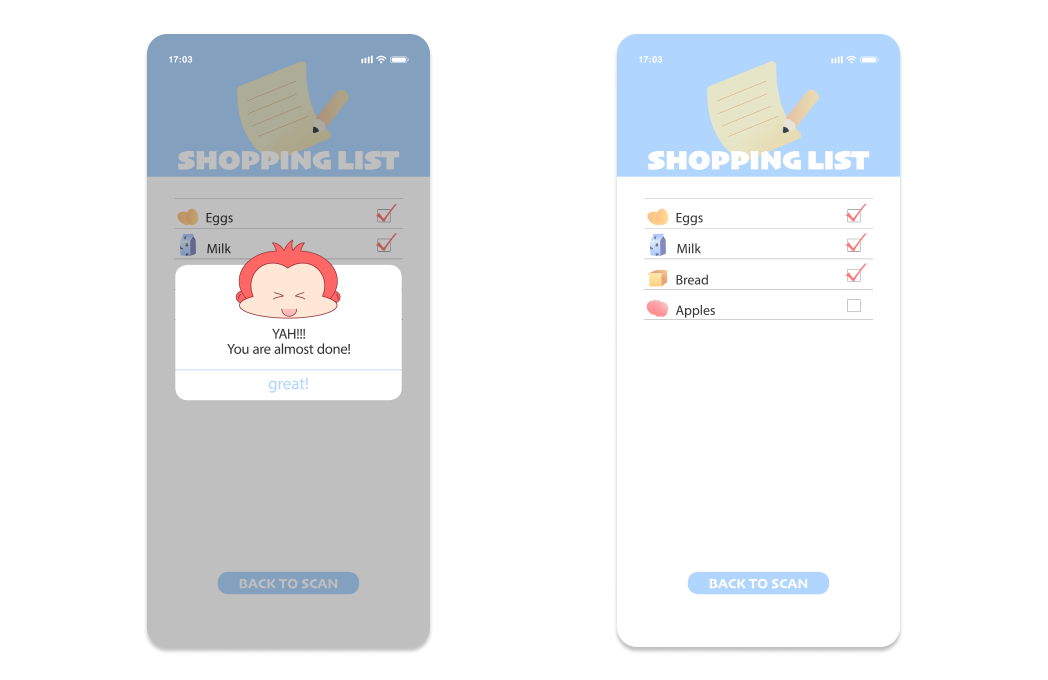
This game encourages children to help their parents by locating items on the shopping list. During this game, children can acquire knowledge about food and earn a small reward upon completing their grocery shopping adventure.
The Biggest Challenge
The initial project scope was extremely broad: we were tasked with refining the grocery-shopping experience. Such an ambiguous target made our design inherently challenging. Recognizing this, I convinced the team to start this project by narrowing the scope.
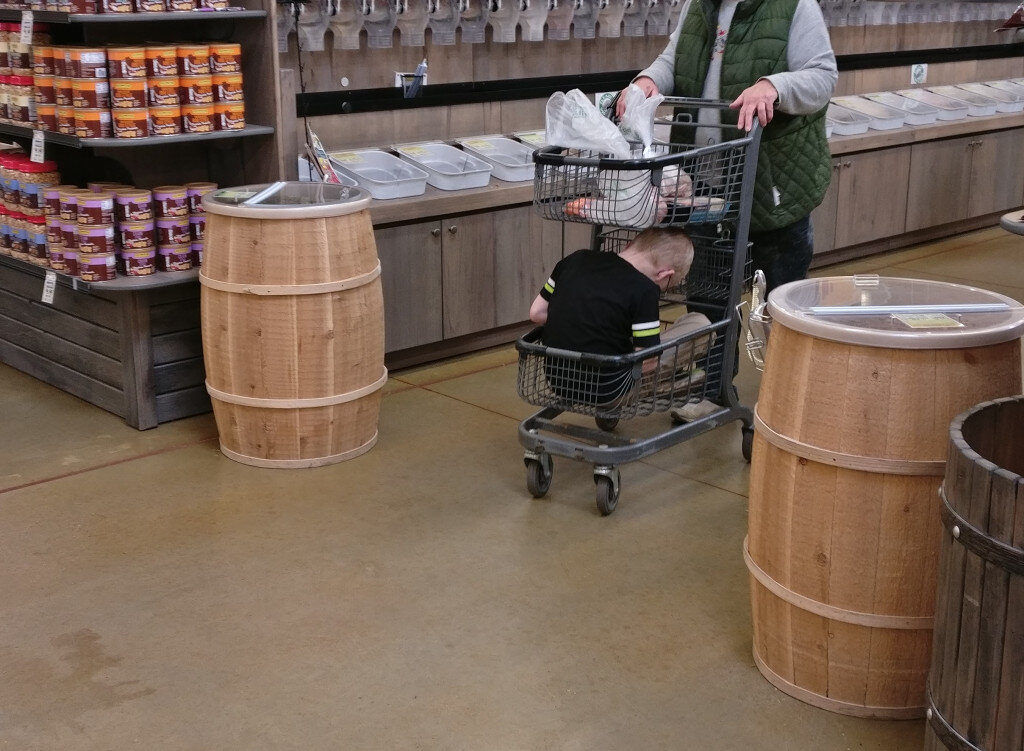
Contextual inquiry helped us focus on children's experience.
Goal
- Understand typical behaviors and experiences of grocery shoppers.
- Pinpoint areas for potential improvement.
Takeaways
- Improving children's shopping experience could potentially elevate the overall satisfaction of all customers.
- Kids would lose their patience quickly, impacting not only their parents but also other shoppers.
- Although there were many kids, the grocery store hadn't implemented proper designs tailored to accommodate them.
I conducted interviews and a literature review.
Goal
- Gather further insights regarding specific problems that may arise when children are involved in the grocery shopping trips.
- Understand parents' perspectives on bringing their children along for grocery shopping.
Takeaways
- Children play a vital role when it comes to purchasing decisions.
- Many parents believe grocery shopping could be a valuable educational opportunity.
- Although children would like to be helpful, parents typically focus on preventing their kids from causing trouble rather than actively involving them.
- Enhancing children's engagement is the key to improving shopping experiences.
Based on the research, we created the following personas.
Susan
- 30 years old
- Lives in Midwest
- Marketing Associate at a tech company
- Usually goes to the grocery store with her son
Jeffrey
- 4 years old
- Lives with his parents
- Loves playing games
- Often gets too excited for grocery shopping
A Typical Shopping Experience
It’s Sunday afternoon, Susan takes Jeffrey to FreshMarket to purchase groceries for next week. She pulls out the shopping list on her phone. As she grabs a cart and sets her son in the cart seat, she knows this is going to be challenging. She hopes her son behaves well in the store and does not annoy other customers. She used to try to let Jeffrey read the shopping list out for her, but Jeffrey got bored easily...

I determined our design should have three distinct qualities.
- Encourage parents and children to work together for grocery shopping.
- Help parents turn the shopping experience into an education opportunity.
- Allow kids to interact with things that are physical and tangible.
One idea stood out.
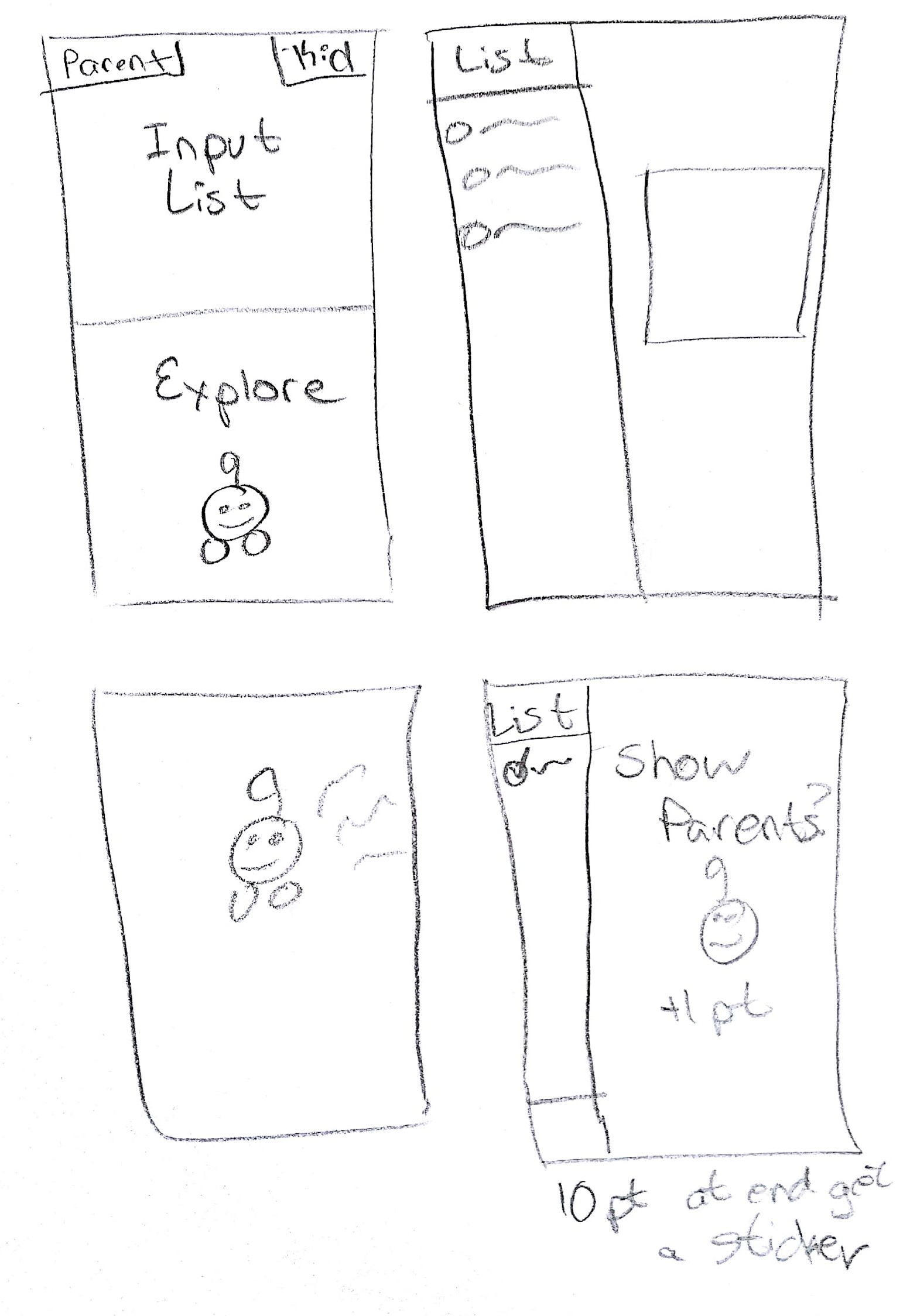
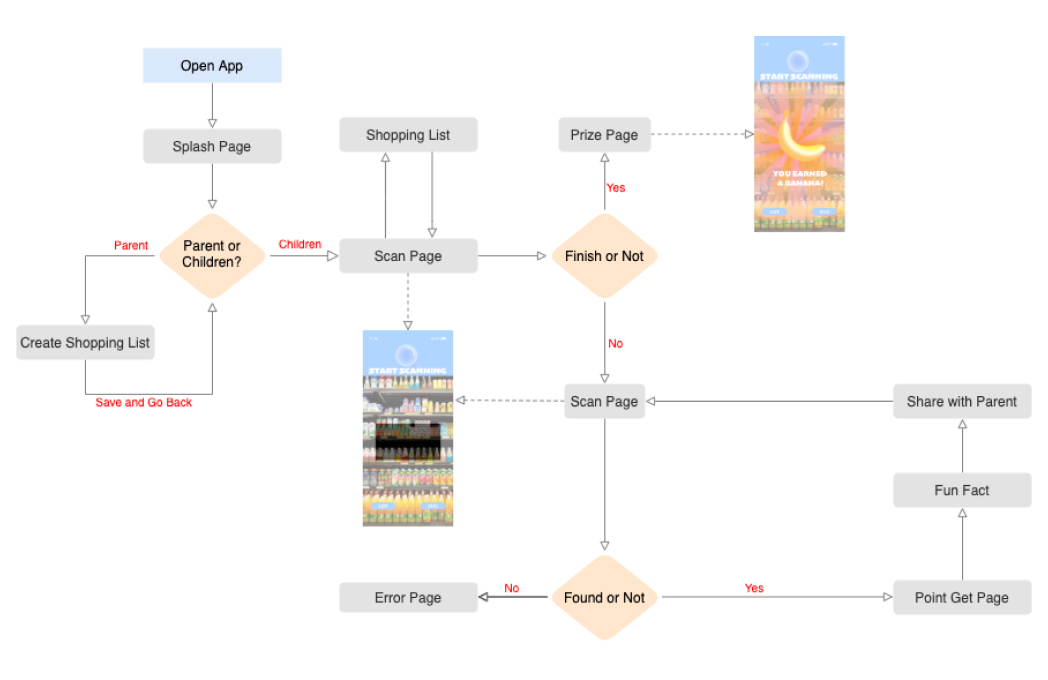
Among many concepts, this specific idea stood out to us. We were envisioning a phone game with the following features.
- Encourage children to assist their parents with finding grocery items in the store
- Kids need to scan the barcode to verify each item, giving children the opportunity to interact with the store and the products.
- While searching for an item, the game provides fun facts, allowing kids to learn about food-related information.
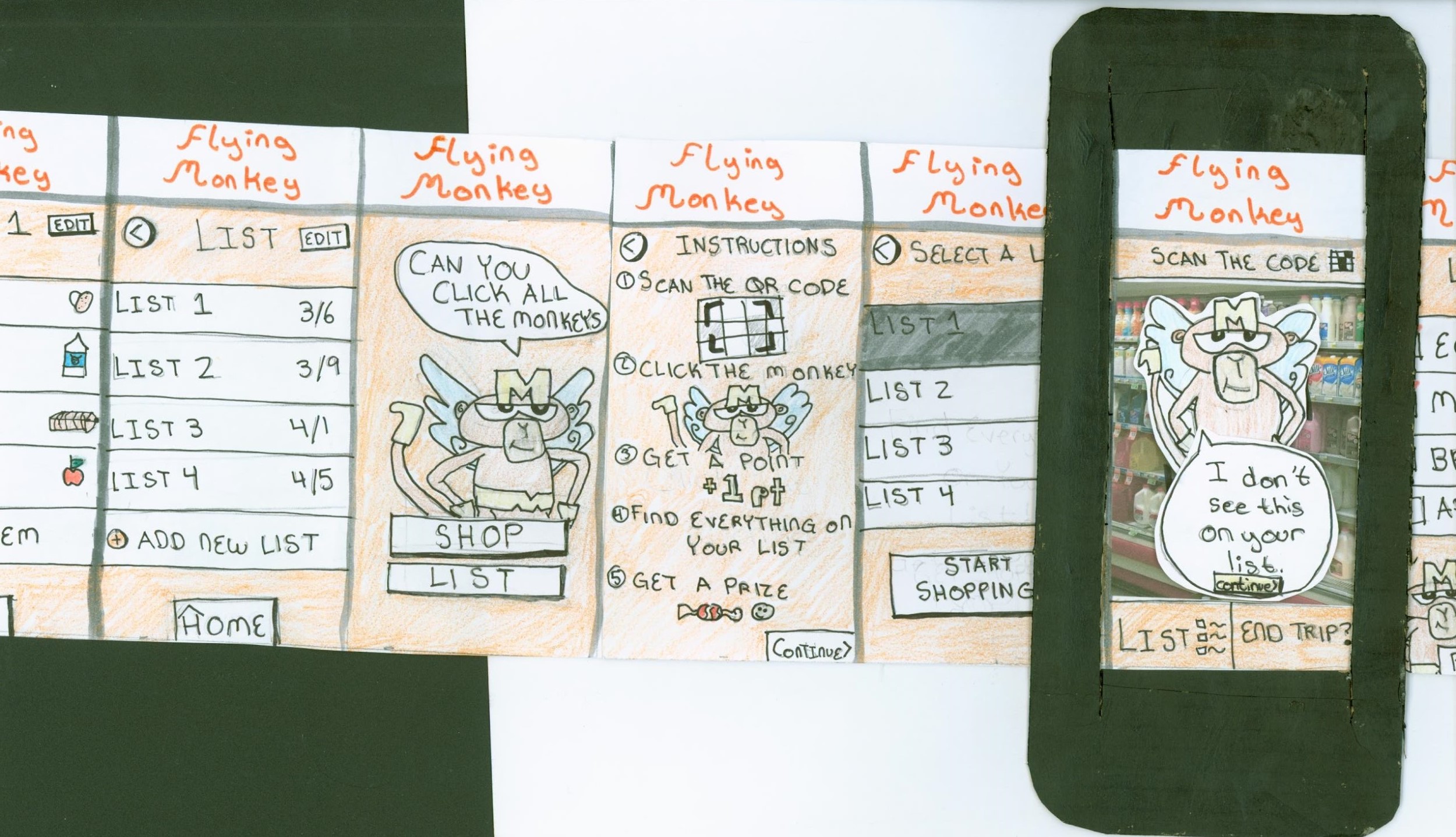
Then, we collaboratively created a paper prototype to examine this idea with kids and their parents.
Concept Evaluation
We tested with two 6-year-olds and their parents in a grocery store. Our young participants really liked our prototype, and they had no problem comprehending the design. During the post-session interview, we received the following comment.
This is the most excited the boys have been about grocery shopping.
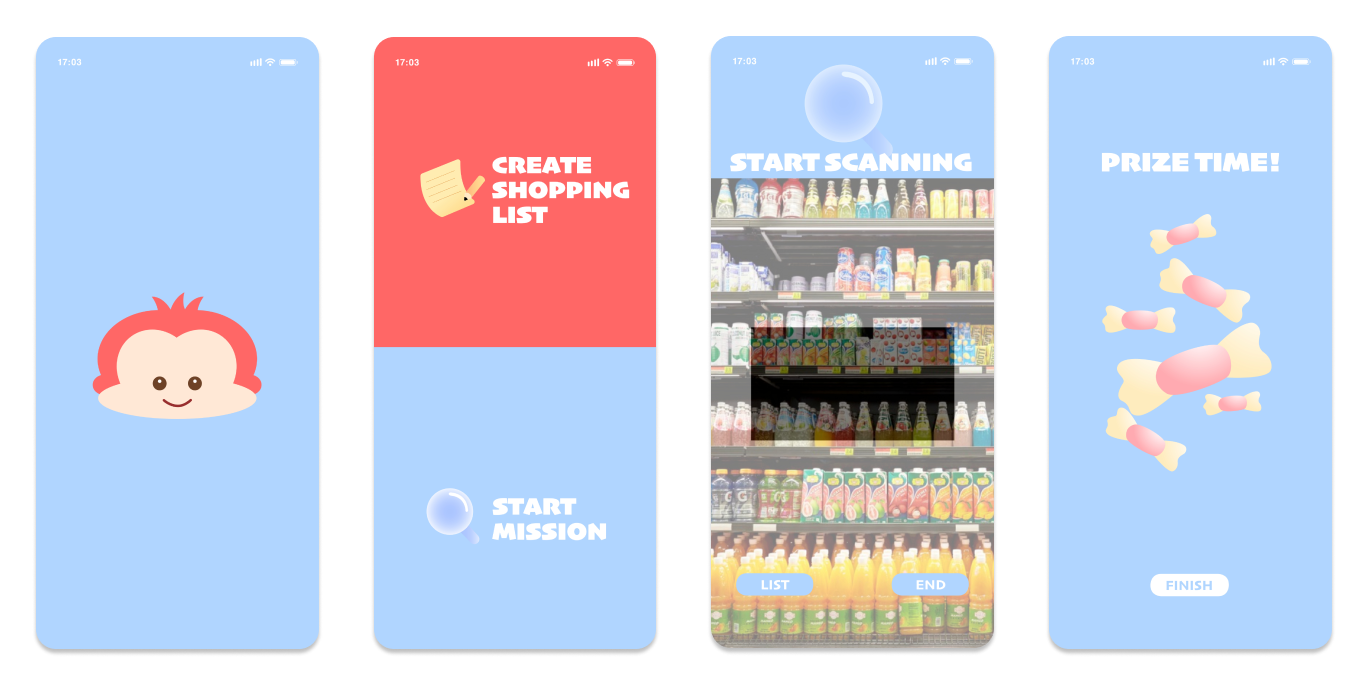
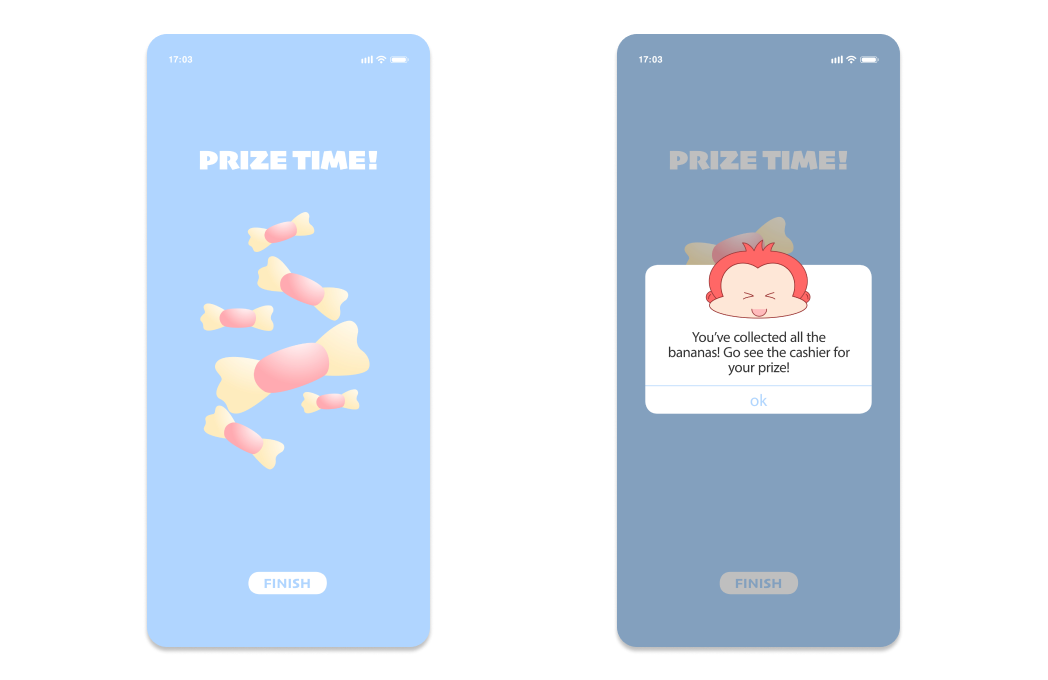
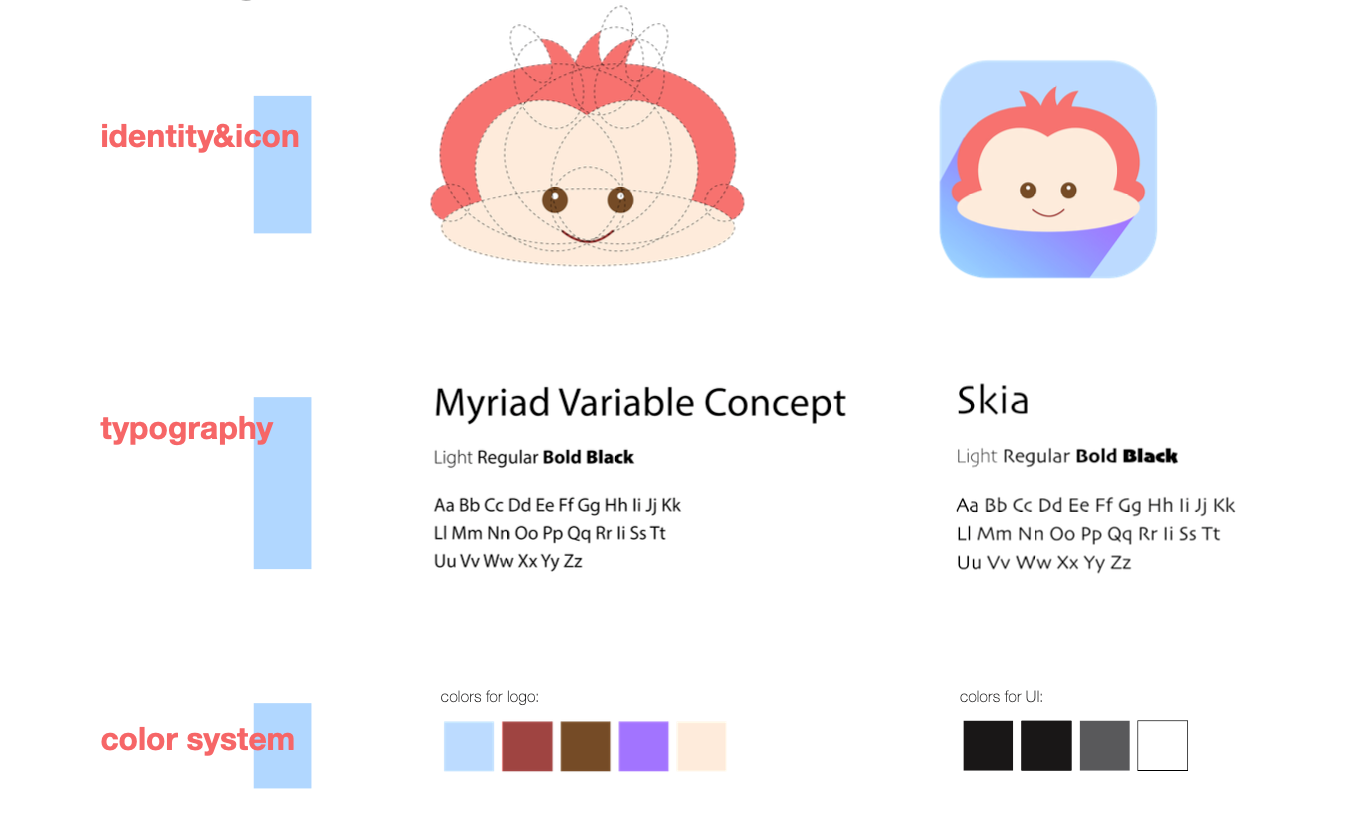
Final Mockups
With the help of another designer, I crafted these mockups.
Looking back...
We learned so much from contextual inquiry.
The contextual inquiry was definitely one of the highlights. It was my first time participating in contextual inquiry, and the insights we gained about our audience were invaluable. This method enabled us to observe individuals authentically within a specific context, revealing genuine user challenges and stories. Moreover, contextual inquiry wasn't limited to observation; it provided an avenue to engage with people directly and capture deeper qualitative insights. The information gathered through this method was so rich that it intensified my desire to utilize it more in future projects when appropriate.
Paper prototypes can be powerful.
The thrill of crafting something tangible is immense, and paper prototypes played a vital role in this project. Since we intended to test our design concepts with children, we needed a medium that would resonate with them, especially when a polished digital prototype wasn't feasible within our timeline. Paper prototypes emerged as the ideal candidate. They are easy to craft, robust, and flexible enough to inject playfulness. Our young participants were as engaged as they would be with a fully interactive game, if not more. I see the potential of paper prototyping in many situations. Its informal and playful nature sparks conversations, curiosities, and ideas. It has the ability to reduce intimidation and biases among stakeholders.
We should have taken accessibility into consideration.
This project was completed early in my design journey, at a time when I wasn't familiar with accessibility. As a result, you might notice from the final mockups that accessibility wasn't a focus. Reflecting on this design now, I can identify several issues. For instance, color contrast is inadequate, and buttons are too small. If I had the chance to revisit this project, accessibility would be at the forefront of my consideration.